“The British are coming” was that famous American saying of the American Revolution, attributed (falsely) to Paul Revere. Was Britain already very British by 1776? Those American colonies were originally English colonies, and until 1707 England had been an independent country. Since 1714 however England was enjoying its third successive German George, and they’d all had German wives
After centuries of being ruled by Normans, we’d had a brief period of English kings, but that all stopped with the death of Elizabeth the First. That was followed by a century of Scottish kings, and before you could blink, the German towels were draped across our monarchs’ deckchairs. While the American Revolution is primarily viewed through the lens of emerging American nationalism, it was significantly influenced by existing concepts of English nationalism and the traditional “rights of Englishmen”. Historians argue that the conflict was partly due to English nationalism in the following ways:
Defending “Rights of Englishmen”.
The Revolution began not as a rejection of English identity, but as a demand for the rights inherent to it.
-
Constitutional Tradition: Colonists believed they were entitled to the same legal protections as subjects living in England, specifically the principle that taxes could only be levied by representatives they had elected.
-
Conservative Rebellion: Many Patriots viewed their actions as a conservative effort to preserve traditional English liberties against what they saw as unconstitutional innovations by the British Parliament.
The colonists did not view their struggle as a bid for new rights, but as a defence of ancient English ones. They frequently appealed to their “rights as Englishmen” established by documents like the Magna Carta (1215) and the Bill of Rights (1689). While they were subjects of the British Crown, they primarily valued the English legal tradition that protected subjects from arbitrary taxation by a body in which they were not represented.
Legacy of the English Civil War
The ideological roots of the revolution often traced back to the English Civil War (1642–1651). The “Whig” political philosophy—which emphasised liberty, the rule of law, and resistance to tyranny—was a core component of 18th-century English political identity. “British” was a relatively new, “layered” identity that coexisted with older English, Scottish, and Welsh loyalties. While the term “British” had existed for centuries, it only began to solidify as a cohesive national identity following the Act of Union 1707.
For most English people, “Britishness” was a civic and political identity superimposed over their primary English heritage. They viewed themselves as English by birth and culture but British in terms of their membership in the United Kingdom and the global British Empire. The identity was strongly tied to being a “metropole” (the centre of an empire) and was often defined by what it was not—namely, not French and not Catholic.
The constant threat of war with France during the 18th century played a massive role in uniting the disparate peoples of the British Isles. Defending “British liberties” against foreign absolutism gave the English a sense of purpose that transcended local regionalism. France was England’s traditional enemy, but not Scotland’s.
Conflict of Two Nationalisms
On the other side of the Atlantic, a burgeoning British (often synonymous with English) imperial nationalism fuelled the conflict. There was a growing sense of British superiority, where the metropolitan elite viewed colonial subjects with condescension, refusing to treat colonial gentry as social or political equals. It is known these days as the ‘Westminster Bubble’
The Revolution is sometimes described as a “civil war” between two different interpretations of British identity. About 20% of the population remained loyal to the Crown, seeing themselves as “British born in the colonies”. For them, rebellion was a betrayal of their national identity. As the British government intensified its military response, the colonists’ sense of “Englishness” was gradually replaced by a distinct American identity. The British came to be seen not as fellow countrymen, but as “foreign invaders”. In the 18th century, “British” was often viewed as a political or imperial category associated with the government in London rather than a cultural identity. Therefore Colonists used “British” to refer to the agents of the crown—the military, customs officials, and Parliament—which they increasingly viewed as oppressive.
The term “British” was a more inclusive, state-level category that could include groups the colonists often looked down upon, such as Catholic French-Canadians or Scottish Highlanders. Identifying as “English” allowed the colonial elite to maintain a sense of superior cultural status.
Enduring Englishness
At the Battle of Trafalgar, Admiral Lord Nelson sent a message which started with the words: “England expects…”. This was because in spite of nearly one hundred years of political union, the Royal Navy did not possess a signal code for the word “Britain”. As many a Scots, Irish or Welsh nationalist would tell you, the British establishment was very English.
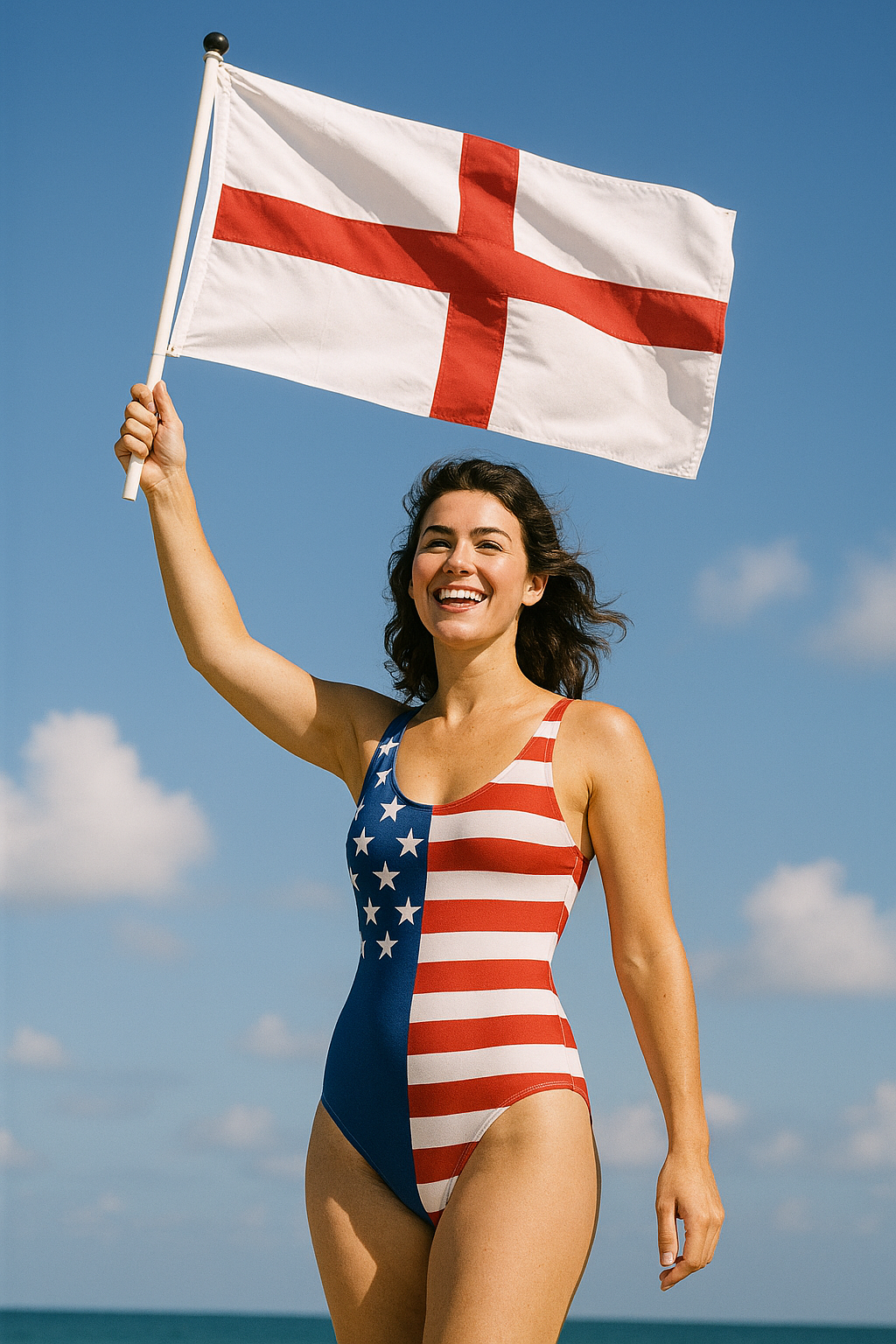
For a long period leading up to the Revolution, most American colonists identified specifically as English rather than “British”. This distinction was a critical factor in the ideological conflict that led to the war. Their self-identification as “English” was driven by several factors. Despite being generations removed from the British Isles, many elite colonists (including George Washington) actively emulated English gentry in their speech, clothing, and lifestyle.
Many felt they had “English blood in their veins” and were proud of their direct descent from English settlers, distinguishing themselves from later waves of non-English immigrants. Some Founding Fathers, like Thomas Jefferson, even leaned into a deeper “Anglo-Saxon” heritage, arguing that their rights descended from pre-Norman England.
It was only when the British government refused to recognise them as full English citizens that the colonists began to fully embrace a distinct American identity. In the last US Census in 2020 more than 46 million Americans declared their English heritage.
References
https://www.reddit.com/r/AskHistorians/comments/x48p7/when_did_the_american_colonialists_begin_to/